

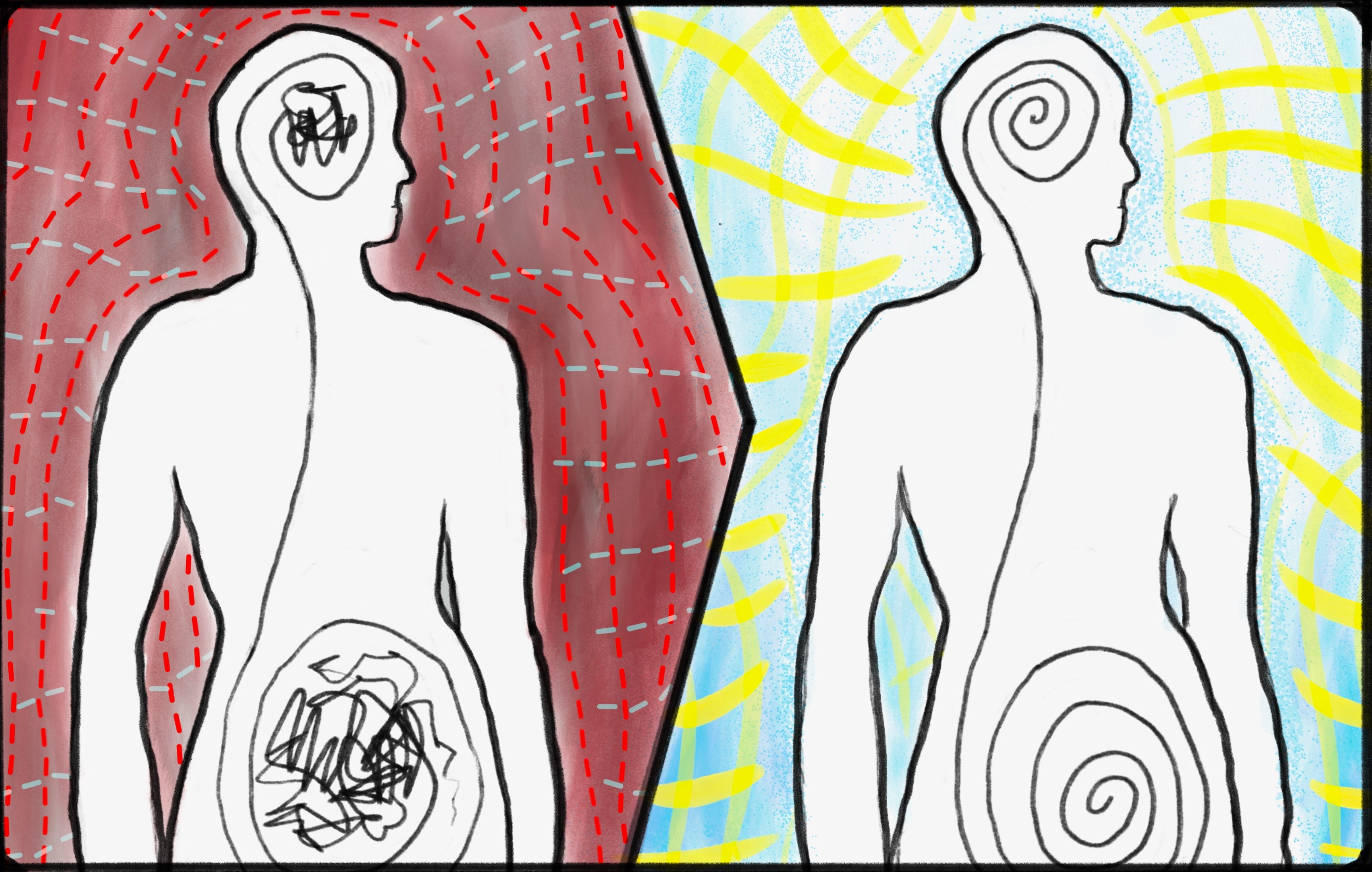
I worried about my wonderful new partner having to take care of me through early onset dementia. Because surely that was what I had, or possibly a brain tumor?
After all, thinking often felt like driving a toothpick through molasses. And my energy would run out inexplicably. But what was possibly most scary was occasionally feeling like I didn’t know where my body was in space.
All of this seemed unfair given my devotion to a healthy lifestyle—home-cooked $$ organic clean food, daily exercise, and plenty of sleep.
The Microbiome Hunch
One day I decided to get serious about fixing my brain fog and fatigue. I had a hunch that it was microbiome related, so I ran an experiment.
I tried two things:
Taking a spore-forming probiotic (using the one that my partner said helped cure his IBS)
Eating homemade natto—a Japanese dish of fermented soybeans—first thing each morning
Why might this work?
The Brain Needs Butyrate and Spore-Forming Probiotics Bake It
Spore-forming probiotics are different from your normal probiotics and the strains found in yogurt. Their spore shell survives the stomach’s harsh acidic environment to spawn in your lower intestine. Once there, they go to work turning soluble fiber into butyrate, which you might think of as “miracle-gro” for your brain.
Butyrate does a whole buncha stuff for the brain:
Fuels neurons
Controls neuroinflammation
Strengthens the blood-brain barrier
Supports mitochondrial function
Improves gut-brain communication
And when you don’t have much of it, you feel like I felt: fatigued and brain fogged.
All of this leads to what you would expect: Studies using spore-forming probiotics have shown improvements in brain fog, cognition, and mood.
So why would you need to take a probiotic? Why don’t you have these bacteria in you already?
Well, I’m not saying antibiotics are the villain but antibiotics are the villain. Don’t get me wrong—antibiotics are life saving and all that, and my recurring lung infections weren’t getting better without them. But I’m not sure having a cup of yogurt is all that’s needed to recover your inner rainforest of gut flora afterwards. So it makes sense that over the years of taking antibiotics, my probiotic population dwindled, and I suffered from the downstream effect.
Natto: The Stringy-Smelly-Alien-Spider-Eggs-Superfood That Could
During my experiment, I ate natto every day in addition to my spore-based probiotic supplement.
Natto makes spore-based probiotics work better, but it also has its own spore-based probiotic and is a badass superfood in its own right. During the fermentation process, natto’s bacteria makes a shit-ton of goodies. One of these is the enzyme nattokinase, which has been studied for its ability to improve spatial learning. Natto also has anti-bloodclot properties, helps build strong bones, is almost as high in protein as chicken, and tastes good (okay your mileage may vary on that one, but I love the taste—try it with mustard and soy sauce).
…So What Happened?
Well within two weeks my brain fog, fatigue, and weird spaciness went away. I’m not superhuman, but I feel good! I can focus for hours, and I don’t have weird deadzones in my awareness. Most of all, my brain and body don’t get in the way of what I want to do.

That was several months ago. I’ve continued to (off and on) take spore-based probiotics and eat natto, and I continue to feel good.
What’s interesting to me is how bad I felt before—dumb, incapable, potentially a burden—and how good I feel now, and how little it took to make the switch. I wonder how many people feel “dumb” when they actually have a solvable health issue. It would have been interesting to take an IQ test then and now.
You Gotta Feed Your Dudes
One note in case you do try spore-based probiotics: These organisms don’t make butyrate out of nothing–they need fermentable fiber to create butyrate.
This isn’t the wheat bran type of fiber that scrubs your colon. That’s insoluble fiber—that stuff’s important, but not useful fuel.
Fermentable fibers include:
Resistant starch (think cooked-and-cooled potatoes and rice, green bananas, oats)
Soluble fiber (find this stuff in onions, garlic, apples, berries, rye, barley, mushrooms, chia)
Certain oligosaccharides (think beans and lentils)
Some polyphenols that microbes convert indirectly (extra virgin olive oil, berries, green tea / matcha, dark chocolate, nuts, coffee, red cabbage)
This made me view my food choices differently: before I might think it most healthy to forego cooked-and-cooled potatoes or rice—just carbs, right? But now I see an important asset in those starches.
Your Results May Vary
I’m not saying if you take a spore-based probiotic and natto every day that your brain fog and fatigue will vanish—your body and microbiome are unique. I’m no doctor and I’m not prescribing anything!
I wanted to share this story because we’re at the beginning of understanding how the microbiome affects our health, and anecdotes like mine may have helpful clues.
There’s More Magic in the Microbiome ✨💩
Solutions to brain fog and fatigue are just a few of the things we may find in the microbiome. A particular bacteria could be responsible for healthy cholesterol, and researchers have identified two strains of gut bacteria that may be directly involved in triggering multiple sclerosis.
If you want to read more about the cutting edge of microbiome research, check out Stephen Skolnick’s blog. And if you tried something that helped your brain fog and fatigue, I’d love to hear about it—message me or comment below!
You had me at "miracle-gro" for brains! This is such a delight to read AND discovery-packed. Can't wait to try out the alien spider eggs and see what my dudes think.
This is so interesting! I miss Natto as I can't buy it where I currently live. I might have to make some on my own. ❤️